Redrick Schuhart and Monkey's parent-child relationship
Roadside PicnicRedrick Schuhart’s father-daughter relationship with Monkey joins ordinary domestic tenderness to the unsettling bodily consequences associated with the Zone. Monkey is not merely a reminder of the risks Redrick’s life has brought into his family: she reaches for him, asks for him, and is welcomed into his arms. The bond is intimate and reciprocal, even as her golden fur and unusual appearance make the meaning of family, inheritance, and human difference impossible to take for granted.
A Family Under Pressure
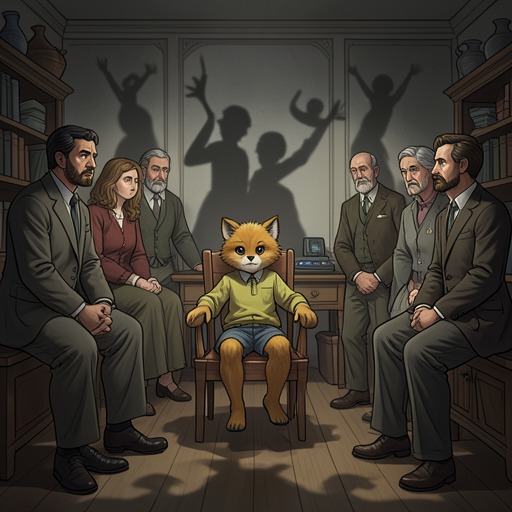
Guta voices the precarious circumstances surrounding Monkey’s birth. She reports that someone has warned her that a stalker’s baby will be a freak, that Redrick is a wanderer, and that the couple will never have a real family. The warning makes Redrick’s unpredictable freedom and possible imprisonment part of the child’s family history before the father-daughter bond is shown in everyday life.
Guta’s answer is a declaration of independence rather than a denial of the burden. She says she is ready for anything, will have and raise the child alone, and can manage without Redrick; she also tells him not to come to her door again. Her words establish how thoroughly the dangers attached to Redrick’s life threaten the couple’s domestic future. They also give Guta her own voice and decision: she is prepared to take responsibility for the child even if Redrick is absent. The later scenes of Monkey asking for her father give that threatened relationship a lived, affectionate reality without erasing the earlier conflict.
A Father’s Return to the Household
In a later domestic scene, Redrick asks Guta how Monkey is as he pulls off his boots. Guta says that Monkey babbled all evening, was difficult to get to bed, and kept asking where her daddy was. The question is a small but pointed sign of attachment: during Redrick’s absence, Monkey’s attention turns specifically toward him, and Guta reports that longing as part of their household conversation.
The home is rendered through practical, sensory details: food is being prepared, butter sizzles in a pan, and fresh coffee fills the air. Against that ordinary setting, Redrick walks barefoot from the entry hall with a basket and takes it to the storeroom before looking in on Monkey. The scene does not make his return into a grand declaration. Its significance lies in the physical ease of his movements through the home and in the intimate domestic routine that places him, Guta, and their daughter together.
Touch, Play, and Recognition
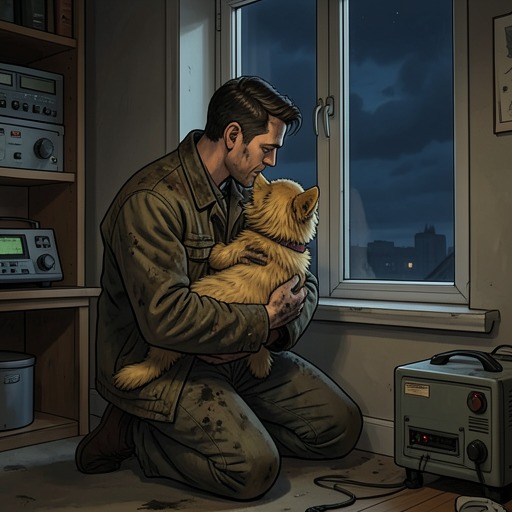
Monkey’s relationship with her father is active, not simply described by the adults around her. When Redrick is doing his tie in front of a mirror, she comes up beside him, shouts, and grabs his leg. He falls back onto the bed, and she immediately clambers onto him, laughing and squealing. The playful reversal makes the child the initiator of contact: she finds him, seizes him, and turns a formal moment of dressing into a game between them.
Redrick responds with careful physical affection. He hugs the warm creature crawling over him and looks into her huge dark eyes, which have no whites. He cuddles his cheek against hers, feeling the soft cheek and its silky golden fleece. Elsewhere, after finding Monkey asleep beneath a crumpled blanket, he cannot resist stroking the warm fur on her back and is struck yet again by its silkiness. The repeated attention to touch—the embrace, cheek against cheek, and hand on her fur—makes paternal tenderness concrete while keeping her altered body in view.
Difference Within the Bond
Monkey’s fur and unusual eyes mark her as physically unlike an ordinary human child, and Redrick’s attention does not conceal that difference. He registers her as a warm, breathing, animal-like presence, yet that description occurs within scenes of closeness: she sleeps in the bedroom, calls for her daddy, climbs over him, and accepts his embrace. The narrative holds bodily strangeness and familial intimacy together rather than treating one as proof against the other.
That juxtaposition gives the relationship its wider significance. Guta’s reported warning casts a stalker’s child as a threat to the possibility of a normal family; the scenes between Redrick and Monkey instead show a particular family bond being made through daily care, play, and touch. They do not settle what Monkey’s condition will mean for her future, nor do they erase the isolation Guta says she could face. They show, more immediately, that Redrick’s daughter seeks him and that he answers her with unmistakable tenderness.